CEA Proposes New EV Charging Safety Standards — Draft Open for Public Comment
By AUTOASTRA Editorial · 7 Oct 2026 · Policy
The CEA has proposed electrical-safety standards covering EV charging and battery storage, with public comments open until 15 November 2026.
A Safety Framework for Charging
The Central Electricity Authority has proposed electrical-safety and operating standards that include electric-vehicle charging infrastructure and battery energy storage systems. The proposal is still a draft as of 6 October 2026, so it does not create an immediate compliance deadline for Indian EV owners. Its practical effect, if finalised, would be on how charging sites are designed, inspected and operated.
The draft was issued through the Chief Electrical Inspectorate Division under Regulation 137 of the CEA's 2026 safety-and-supply amendment framework. It covers EV charging stations alongside solar, wind, storage and power infrastructure.
| CEA charging-safety draft | Detail |
|---|---|
| Status | Draft, as of 6 October 2026 |
| Covers | EV charging infrastructure and battery storage |
| Reported focus | Earthing, insulation, fire safety, residual-current protection |
| High-voltage scope | Installations above 650V |
| Comments close | 15 November 2026 |
What Changes, and What Does Not
For charging infrastructure, the standards matter because a public charger is not just a vehicle accessory. It includes the supply connection, protection equipment, cable, earthing arrangement, enclosure, civil work and the process used to inspect and maintain the site. The draft is reported to set out requirements around earthing, insulation, equipment protection, fire safety and residual-current protection. Crucially, there is no new charging fee, vehicle inspection requirement or owner retrofit deadline announced as part of the draft.

What This Means for You
Nothing in the current proposal asks EV owners to replace a cable, re-register a car or obtain a new certificate. Before a long journey, the useful checks remain practical: confirm the connector type, verify the station is listed as available, and keep a second charging option on your route. The longer-term benefit, if the standards are finalised, is more consistent and safer charging, though the final cost and any effect on public charging prices cannot be known from a proposal. Until the CEA publishes a final standard, headlines about new EV charging rules should be read as proposals rather than rules in force. Plan routes using charging data and compare models on our Compare page.
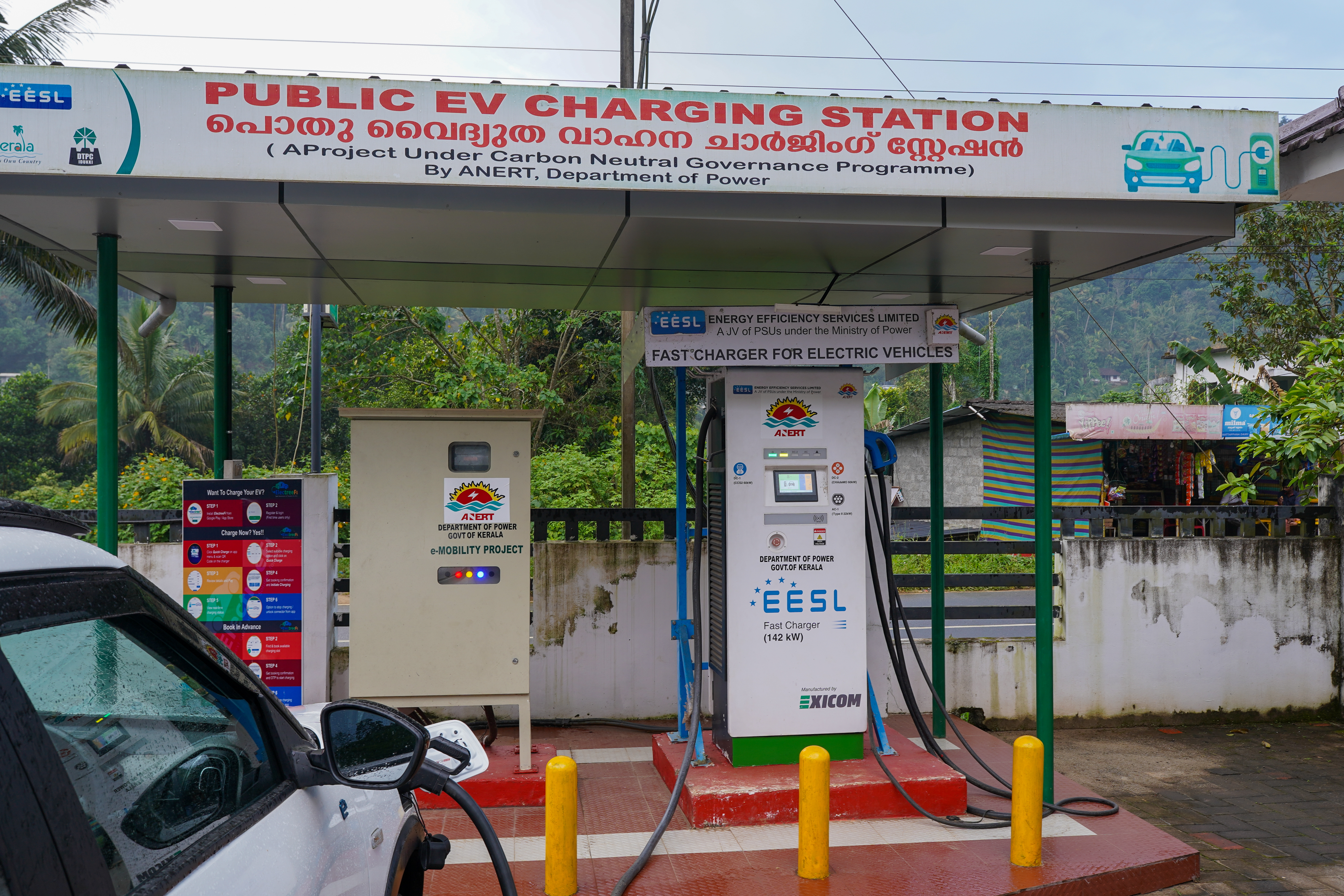
(Sources: Central Electricity Authority, Mercom India, FuelPrice. Image: EV charging station in Begumpet, Hyderabad by IM3847, Wikimedia Commons, CC BY-SA 4.0. Cover: cover-3-cea-charging-safety.jpg. Mid-article images: EV charging stations at Idukki Dam Park and Government Secretariat, Thiruvananthapuram, Wikimedia Commons, CC BY-SA 4.0)
Related Articles
- Chery's iCAUR V25 Revealed — A Boxy Electric SUV With a Range Extender and a JSW India Link
- Hyundai Bayon India Launch on 26 October — Price, 115 PS Engine, AI Assistant and Level 2 Pro ADAS
- Ultraviolette VX-100 Platform Debuts — Four New EVs in 12 Months, Including the Tesseract Scooter
- Bajaj Pulsar N250SS Launched at ₹1.59 Lakh — Four-Valve Engine, Six-Speed Gearbox and a TFT Console
More on AUTOASTRA: All Articles · News · Reviews · Fuel Prices · Home