GST Council Clears 5% GST Option for EV Taxis and Rentals, Relief for Used-Car Dealers
By AUTOASTRA Editorial · 11 Oct 2026 · Policy
The 57th GST Council has recommended an optional 5% GST rate for EV passenger transport and operator-led rentals, plus input tax credit relief for second-hand vehicle dealers.
What the 57th GST Council Decided
The GST Council, chaired by Finance Minister Nirmala Sitharaman, has recommended a set of measures that touch both electric mobility and the used-car business. The most talked-about one is an option for operators to pay GST at 5%, with restricted input tax credit, on passenger transport and motor-vehicle rental services supplied using an electric vehicle, where the cost of battery charging is included in the amount charged.
This closes a long-standing anomaly. The existing concessional rate options were tied to services where the cost of fuel was included, and because electricity is not treated as fuel, EV fleets were left out. The change aligns EV transport with conventional-vehicle transport, but it is an option with restricted credit, not a blanket rate cut.
| Recommendation | What it covers |
|---|---|
| 5% GST option for EV transport | Passenger transport and operator-led rentals using EVs, with charging cost in the fare and restricted input tax credit |
| Used-car dealer relief | Margin-scheme benefit can be taken even if credit is claimed on business inputs and services, but not on the purchase of second-hand vehicles |
| Faster refunds | Refunds on input services in inverted duty cases, and on capital goods, over a phased timeline |
| Enforcement relief | Removal of arrest powers, limits on stopping goods vehicles, prosecution threshold raised to Rs 5 crore |
What It Does Not Change
It is important to be precise here, because several headlines overstated the move. The recommendation does not change the GST rate on buying an electric car, scooter or bus, which stays at 5%. It also does not cut the GST on standalone public charging, which continues at 18%. The 5% option applies only to specified transport and rental services, and even then the lower headline rate may not lower an operator's total cost because input tax credit is restricted.
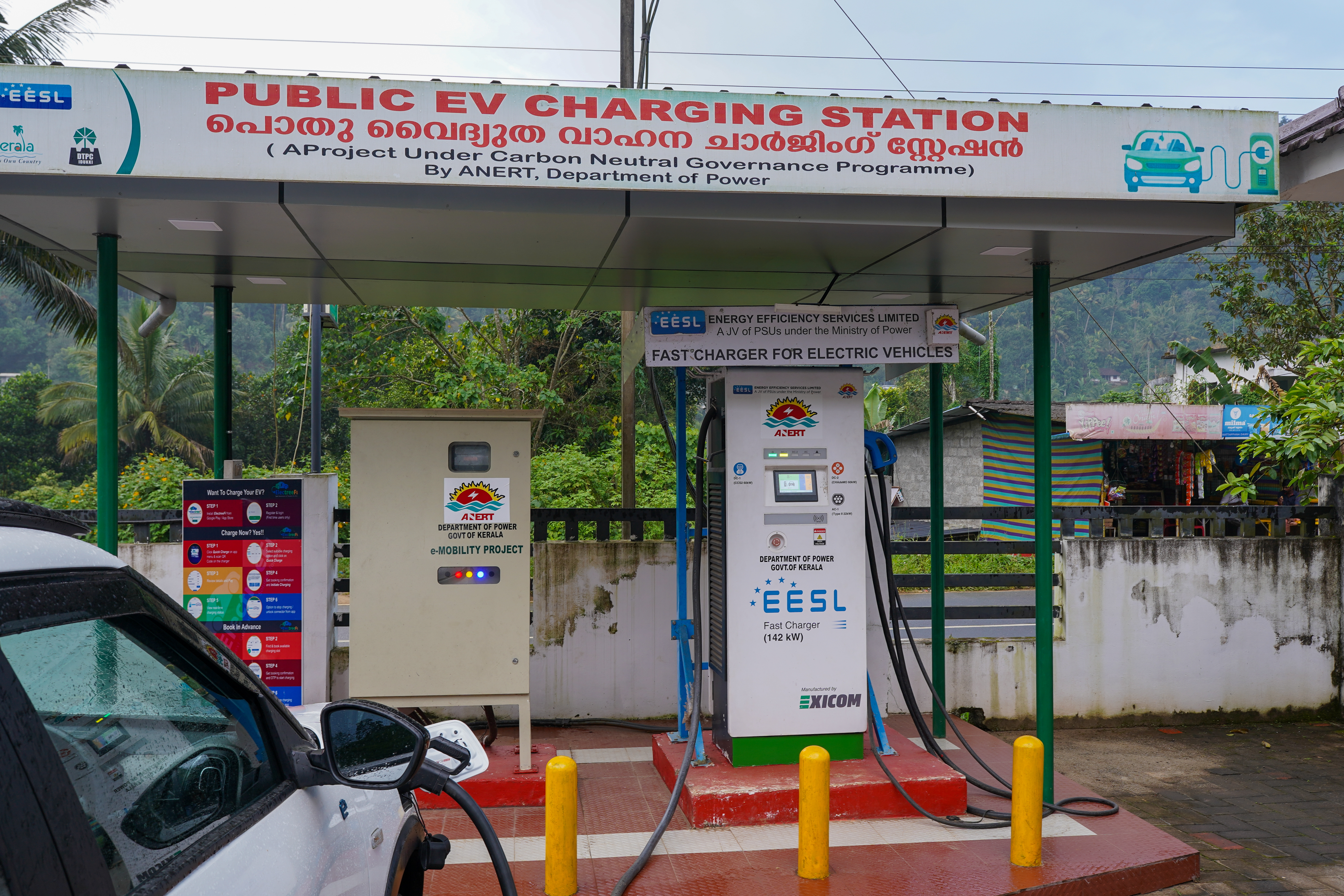
For the used-car trade, the clarification is genuinely useful. Dealers who sell second-hand cars under the GST margin scheme can now also claim credit on the input goods and services they use to run the business, as long as they do not claim credit on the purchase of the vehicles themselves. That reduces a compliance grey area that had pushed up costs.

What This Means for Buyers
For now, nothing changes on your invoice. These are recommendations, and they take effect only when the government issues the detailed notifications and circulars. EV fleet and rental operators should wait for the effective date before changing their billing, and car buyers should not expect a lower sticker price on a new EV from this announcement. Use our EV running-cost calculator and Fuel Price tracker to see what actually moves your ownership cost today.
(Sources: PIB and GST Council 57th meeting recommendations, Taxguru analysis of the services FAQs. Image credits: EV charging station photo via Wikimedia Commons, CC BY-SA 4.0; Ola S1 Pro photo via Wikimedia Commons, CC BY-SA 4.0.)
Related Articles
- Chery's iCAUR V25 Revealed — A Boxy Electric SUV With a Range Extender and a JSW India Link
- Hyundai Bayon India Launch on 26 October — Price, 115 PS Engine, AI Assistant and Level 2 Pro ADAS
- Ultraviolette VX-100 Platform Debuts — Four New EVs in 12 Months, Including the Tesseract Scooter
- Bajaj Pulsar N250SS Launched at ₹1.59 Lakh — Four-Valve Engine, Six-Speed Gearbox and a TFT Console
More on AUTOASTRA: All Articles · News · Reviews · Fuel Prices · Home