India EV Charging Network 2026: 67,657 Chargers vs 13.2 Lakh Needed by 2030
By AUTOASTRA Editorial · 30 Sept 2026 · Electric
India has 67,657 public EV charging points as of August 2026 against a projected need of 13.2 lakh by 2030. Here is the full numbers, gaps and what comes next.
India EV Charging Network in 2026: The Honest Numbers
India's electric vehicle story has quietly crossed a milestone most buyers missed. The country now has 8.7 million EVs on its roads, and electric vehicles made up 8.25 percent of new registrations in FY26. But the number that decides whether your next car can realistically be electric is different: 67,657. That is how many public charging points India had as of August 2026, according to Ministry of Heavy Industries data, including 1,139 battery-swapping station interfaces. Against a projected requirement of 13.2 lakh charging points by 2030, the network stands at roughly 5 percent of what the decade will demand.
The gap is not a reason to panic, but it is a reason to understand exactly where the network is strong, where it is thin, and what is being done about it before you commit lakhs to a battery-powered car. This is the complete picture, in numbers.
How fast has the charging network actually grown?
The growth rate looks impressive in isolation. India had about 5,000 public chargers in early 2022, which climbed to 29,151 by December 2025 and then more than doubled again to 67,657 by August 2026. That is nearly a fourteen-fold expansion in under five years, and it tracks the steep rise in EV registrations, which crossed 2.5 million in FY26 alone.
| Period | Public Charging Points in India |
| Early 2022 | ~5,000 |
| December 2025 | 29,151 |
| August 2026 | 67,657 (including 1,139 battery-swapping interfaces) |
| Projected requirement by 2030 | 13.2 lakh |
Those figures come from the Ministry of Heavy Industries and a September 2026 study by Rubix Data Sciences that cites baseline projections from the Confederation of Indian Industry. The ministry's own PM E-DRIVE scheme has a dedicated allocation of ₹2,000 crore for charging infrastructure, targeting more than 72,000 public chargepoints through subsidies for equipment and upstream infrastructure.
Why most of India's chargers are slow ones
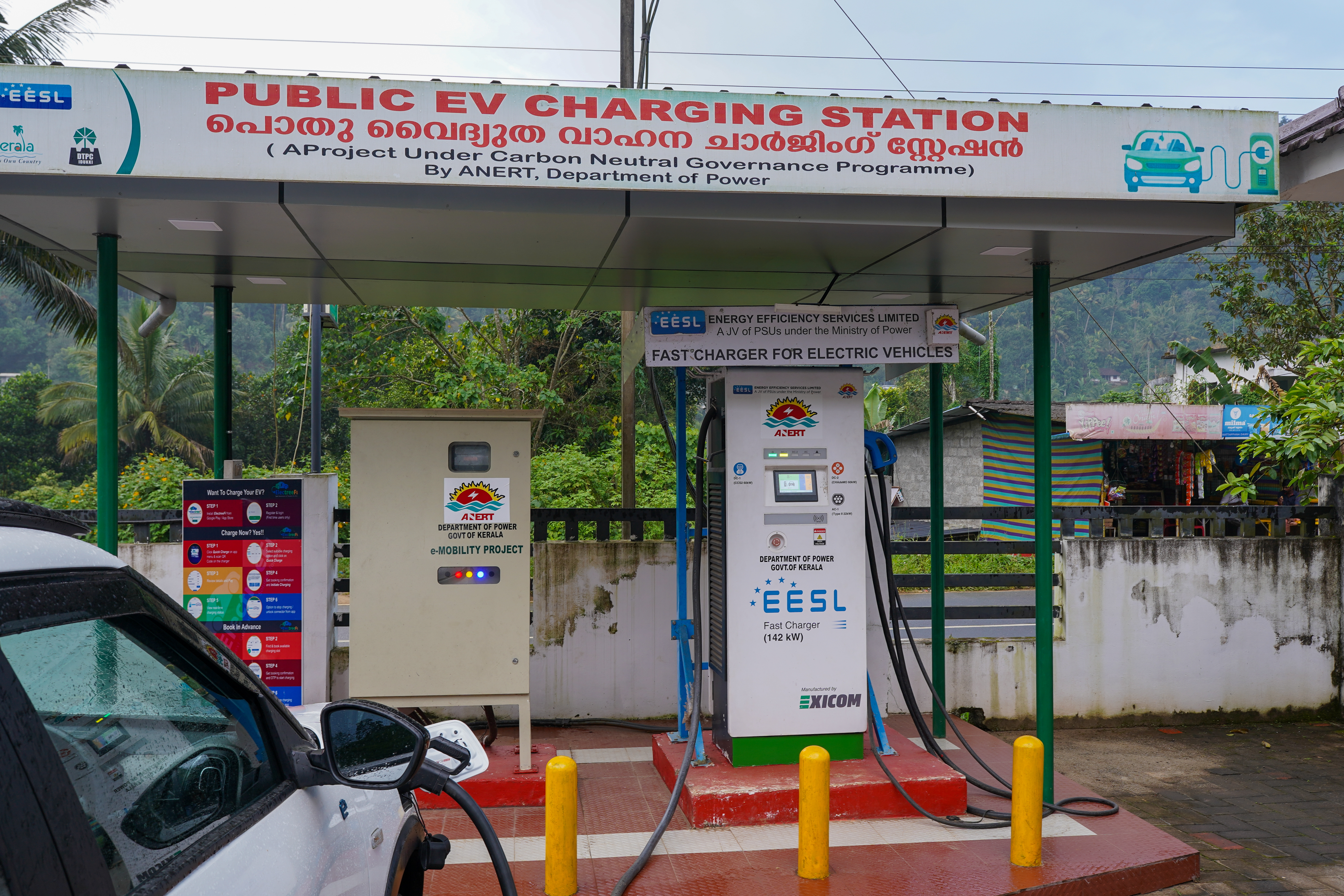
The raw count flatters the network. Excluding battery-swapping points, 48,709 of India's 66,518 public chargers, or roughly 73 percent, are rated below 30kW. Another 15,753 sit between 30kW and 60kW. Only 1,513 chargers fall in the 61-120kW range, 534 in the 121-240kW band, and just nine chargers nationally are rated above 240kW.
| Charger Rating | Number of Chargers | Share of Network |
| Below 30kW | 48,709 | ~73 percent |
| 30-60kW | 15,753 | ~24 percent |
| 61-120kW | 1,513 | ~2 percent |
| 121-240kW | 534 | Under 1 percent |
| Above 240kW | 9 | Negligible |
This is not entirely bad planning. India's electrification so far has been led by two- and three-wheelers, which charge slowly and cheaply, with segment penetration of roughly 8.88 percent for two-wheelers and 60.77 percent for three-wheelers, against 5.70 percent for passenger cars. Slow chargers suit that fleet. The problem arrives with cars: a highway trip in a mid-size electric SUV needs 60kW-plus DC charging to make stops tolerable, and that class of hardware barely exists outside big cities today.
The utilisation paradox: too many idle chargers, too few working ones
Here is the strangest number in Indian charging. Public chargers across the country run at a utilisation rate of just 1 to 5 percent, according to the Rubix Data Sciences analysis. Most chargers sit idle most of the day, which destroys the business case for operators in smaller cities even as drivers in exactly those cities complain they cannot find a reliable plug. Low utilisation leads to poor maintenance, poor maintenance pushes drivers away, and the cycle deepens. This is why the policy conversation has shifted from counting installed chargers to enforcing uptime, a shift visible in tenders that now write 95 percent monthly uptime into contracts.
The geography compounds it. The top 10 states, led by Karnataka, Maharashtra and Uttar Pradesh, hold 78 percent of all public chargers in the country. If you drive an EV in Kerala, Delhi or Maharashtra, life is easier; in most other states, home charging carries the load.
What the government is doing about it
Three moves stand out. First, the Ministry of Heavy Industries has identified 60 high-priority highway corridors where it wants assured charging coverage and has shared the list with SIAM, proposing that manufacturers divide corridors among themselves and build reliable networks over the next two to three years. Second, the PM E-DRIVE allocation of ₹2,000 crore for charging is structured to push equipment beyond metro centres. Third, NITI Aayog has asked states to refocus their EV subsidies on electrifying public transport fleets and high-use corridors in select cities, after the Centre and states together committed more than ₹1.27 lakh crore to electric mobility.
States are also stepping in directly. Telangana's renewable energy development corporation has floated a request for selection covering 200 public charging stations across the Greater Hyderabad, Cyberabad and Malkajgiri areas, to be run by private operators for an initial 10-year term, at a notified tariff of ₹13 per kWh before taxes and a 95 percent monthly uptime requirement.
Networks to know: who is actually building
| Network | Stated Scale | Focus |
| Tata Power | 6,700+ public charging points across 700+ cities | Mixed AC and DC, hubs from 60kW to 600kW |
| ChargeZone | 13,500+ charging stations | Mixed network, long-term goal of 1 million points |
| HPCL HP eCharge | 5,600+ stations, 150+ battery-swap points | Fuel-outlet based charging |
| Mahindra Charge_iN | 50 stations, 200+ points | Only 180kW dual-gun DC fast chargers, highway corridors |
Mahindra's approach is worth watching because it inverts the usual model. Charge_iN installs only 180kW dual-gun DC fast chargers on inter-city corridors, paired with wayside amenities, and reached 50 live stations in September 2026 with a target of 250 stations and about 1,000 points by December 2027. Its first co-located site with Hindustan Petroleum, at Sajgaon on the Mumbai-Pune Expressway, came out of a March 2026 partnership that gives it access to more than 25,000 HPCL fuel outlets: land, power connection and road access already solved. Hitting the December 2027 target now needs roughly 13 new stations every month, so the fuel-outlet partnership will do most of the heavy lifting. We track this network and its rivals in our charging news coverage on AUTOINDIA.

The standards India is betting on
Fragmentation is the hidden tax on charging. The Bureau of Indian Standards and the Department of Science and Technology are working on fixes. LECCS, the light electric vehicle combined charging system under IS 17017, combines AC charging up to 7kW and low-voltage DC up to 12kW in one plug for two- and three-wheelers. Universal Type-2 sockets with detachable smart cables target destination charging from 2kW to 22kW. For trucks, the frameworks go much bigger: split-type DC chargers distributing 40kW to 240kW and more, dual-gun 500kW systems, overhead pantographs up to 600kW, and megawatt charging systems peaking at 3.75MW for heavy logistics fleets. A 3kW scooter plug and a 3.75MW truck system are the two ends of the same policy file.
The apartment charging problem nobody counts
Public charger counts also hide the issue that shapes daily EV life for most Indian buyers: charging at home in an apartment. Resident welfare associations across cities routinely block charger installations, citing load sanctions, and municipal building rules are often contradictory on what is even permitted. Ather Energy has responded with Ather Node, a load management system that raises or lowers each scooter's charging rate based on the spare electricity available in a complex and automates billing, because few societies can justify the ₹50 lakh-plus cost of a new transformer purely so residents can charge vehicles. That is a private fix to a public problem, and it signals where the real bottleneck sits: not in vehicle supply, which Tata executives openly say is running at a fraction of demand, but in distribution infrastructure, transformer capacity and the finances of state power utilities. Buyers in states with creaking grids should factor home-charging reliability into their decision just as much as charger counts.
What this means for you
If you drive mainly within your city and can charge at home, the public network barely matters; India's slow-charger-heavy network is actually fit for that use case, and running costs remain far below petrol. If your life involves highway runs, buy an EV with a large battery and strong DC fast-charging speed, plan routes around the fast-charging corridors that do exist, and check live charger status before you leave rather than trusting a directory listing. And if you live outside the top 10 charging states, treat public charging as a backup, not a plan. The 2030 target of 13.2 lakh points means the network must grow roughly twentyfold in four years; some of that will happen, but a buyer in 2026 should buy for the network that exists today, not the one promised for the end of the decade. More EV ownership guides and news are on AUTOINDIA.
Will the biggest problem for EV owners solve till 2030 ?
(Sources: Ministry of Heavy Industries data as of August 2026, Rubix Data Sciences study citing CII projections, NITI Aayog India Electric Mobility Index 2025, evfy.in, fuelprice.co.in, allindiaev.com, thehindubusinessline.com. Images: Wikimedia Commons, CC BY-SA 4.0)
Related Articles
- Best Cars Under ₹10 Lakh in India 2026 — Ranked for Safety, Mileage and Family Use
- Best Mileage Cars in India 2026 — Petrol, Diesel, CNG and Hybrid Ranked
- Level 2 ADAS Cars in India Under Rs 20 Lakh 2026 — The Complete List and What Each Costs
- Best Car Discounts This Diwali 2026 — Model-by-Model Festive Offers Compared
More on AUTOASTRA: All Articles · News · Reviews · Fuel Prices · Home