India Proposes BS7 Emission Norms From April 2029: What Changes for Cars and EVs
By AUTOASTRA Editorial · 21 Oct 2026 · Policy
India has proposed BS7 emission norms from April 2029, adding brake and tyre particle limits and EV battery durability rules. Existing BS6 vehicles are unaffected.
India Proposes BS7 Emission Norms From April 2029
The Ministry of Road Transport and Highways has proposed Bharat Stage VII emission norms for new vehicles from April 1, 2029, a rulebook that reaches beyond the exhaust pipe for the first time to cover brake dust, tyre wear and electric-vehicle battery health. The draft, released for public comment, aligns India with Europe's Euro 7 standards and gives carmakers roughly two and a half years to prepare.

The rollout is phased over six years. New passenger cars fall under BS7 from April 2029, light commercial vehicles and pick-up vans from April 2030, and heavy trucks and buses from April 2031, with a third phase finishing in 2035. Existing BS6 vehicles on the road are unaffected; the norms apply only to vehicles manufactured after the cut-off dates.
| Proposed BS7 phase | Applies from |
|---|---|
| New passenger cars | April 1, 2029 |
| Light commercial vehicles and pick-up vans | April 1, 2030 |
| Heavy trucks and buses | April 1, 2031 |
| Final phase for all categories | April 1, 2035 |
For petrol cars the draft keeps the main tailpipe limits but tightens how they are measured. The particle-count threshold drops from 23 nanometres to 10 nanometres, capturing far smaller particles, and real-world driving tests must meet the laboratory limits with no tolerance for nitrogen oxides or particle numbers, down from the 1.43 and 1.5 conformity factors under BS6. On-road testing with portable equipment begins from April 2030.

The rules also set minimum battery durability for electric and plug-in hybrid vehicles built from April 2029: batteries must hold at least 75 per cent of original capacity after five years or 1,00,000 km, and 67 per cent after eight years or 1,60,000 km. From April 2031, cars face brake-particle limits of 3 mg per km for pure EVs and 7 mg per km for hybrids and combustion vehicles, tightening to 3 mg per km across all powertrains by 2035. Tyre-abrasion limits follow, with numbers still to be notified.

What It Means for Buyers
Nothing changes for the car you own today, and no retrofitting programme is proposed. What matters is the future price signal: industry estimates suggest the extra engineering and testing could add roughly ₹75,000 to the cost of an SUV and far more to a truck, and carmakers have asked for a later start. Battery durability rules, though, are good news for used-EV buyers, since they put a floor under how much range a pack is allowed to lose. See how running costs stack up on our EV calculator and follow policy coverage on our news desk.
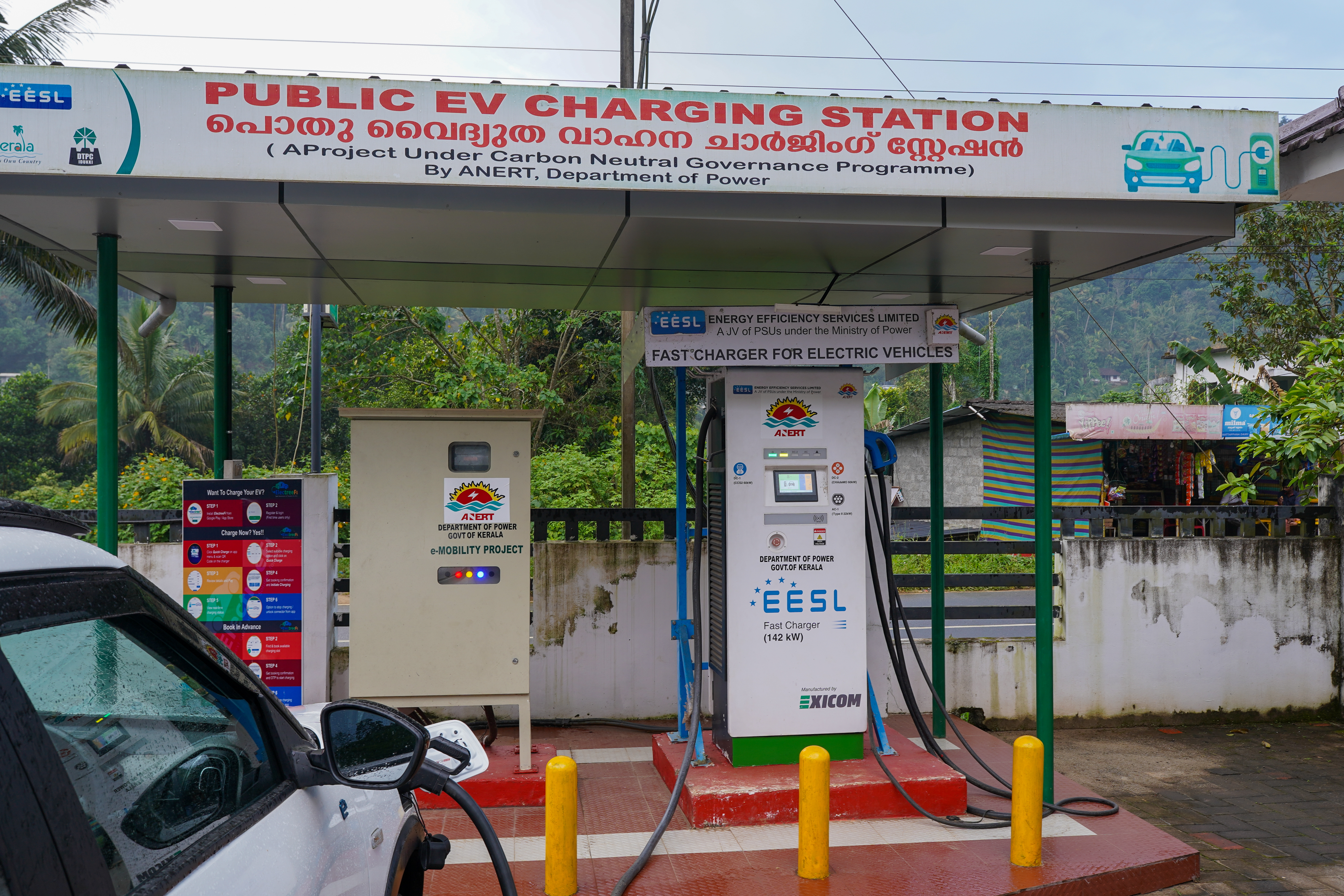
(Sources: MoRTH draft notifications, October 2026, via The Hindu, Financial Express, Autocar India and Forbes India; The Hindu BusinessLine on cost estimates. Images: Wikimedia Commons, CC BY 3.0, CC BY 1.0 and CC BY-SA 4.0.)
::KEY_NUMBERS:: Cars from | April 2029 Trucks and buses from | April 2031 Battery floor | 75 per cent at 5 years SUV cost impact | about ₹75,000 ::TLDR:: New passenger cars fall under BS7 from April 2029 Rules cover brake dust, tyre wear and battery health, not just exhaust Petrol and diesel limits largely retained, but measured far more strictly Existing BS6 vehicles on the road are unaffected ::TIMELINE:: April 2029 | New passenger cars April 2030 | Light commercial vehicles and pick-up vans April 2031 | Heavy trucks and buses April 2035 | Final phase for all categories ::GLOSSARY:: BS7 | Bharat Stage VII, India's next emission standard, aligned with Euro 7 RDE | real driving emissions, tested on the road rather than in a lab Battery durability | how much capacity an EV battery must retain over time ::PULLQUOTE:: For the first time, India's emissions rulebook will judge a car by more than what leaves its exhaust pipe. ::PROS:: Cuts ultrafine particle limits to 10 nanometres Sets a battery health floor, helping used-EV buyers Existing vehicles unaffected ::CONS:: Could add roughly ₹75,000 to an SUV and more to a truck Carmakers say lead time is short Some limits still to be notified separately ::POLL:: Is April 2029 too soon for BS7? || Yes, give more lead time || No, clean air cannot wait || Only if prices do not rise much ::SOURCES:: Ministry of Road Transport and Highways draft notifications, via The Hindu and Financial ExpressRelated Articles
- Chery's iCAUR V25 Revealed — A Boxy Electric SUV With a Range Extender and a JSW India Link
- Hyundai Bayon India Launch on 26 October — Price, 115 PS Engine, AI Assistant and Level 2 Pro ADAS
- Ultraviolette VX-100 Platform Debuts — Four New EVs in 12 Months, Including the Tesseract Scooter
- Bajaj Pulsar N250SS Launched at ₹1.59 Lakh — Four-Valve Engine, Six-Speed Gearbox and a TFT Console
More on AUTOASTRA: All Articles · News · Reviews · Fuel Prices · Home