India's EV Charging Network in 2026 — 67,657 Chargers Built, 1.32 Million Needed by 2030
By AUTOASTRA Editorial · 13 Oct 2026 · Electric
India has built 67,657 EV chargers but needs 1.32 million by 2030, and most of the load is quietly landing on home sockets, not public stations.
The Number That Sounds Big and the Number That Matters
India had installed 67,657 electric vehicle chargers across states and union territories as of 7 August 2026, according to Ministry of Heavy Industries data. That figure includes 1,139 chargers attached to battery-swapping stations. The public charging station count, a narrower measure, reached 29,151 by December 2025, up from roughly 5,000 in 2022, a nearly six-fold jump in three years. By July 2026, the count of charging points had climbed to 52,718.

Those are real gains, and they matter. But the same data carries a warning. Excluding battery-swapping units, 48,709 of 66,518 chargers, about 73 percent, are rated below 30 kW. A low-power AC charger can take hours to fill a car battery. For a two-wheeler or a three-wheeler making short trips, that is fine. For a passenger car on a highway run, it is close to useless. India has built a lot of chargers, but it has not built many of the fast ones that long-distance electric driving depends on.
Where the Load Actually Lands
The more important insight is that public charging is not where most electric energy is consumed. A study by the charging firm Kazam with the Alliance for an Energy Efficient Economy found that 80 to 90 percent of daily EV energy consumption across two-wheelers, three-wheelers and cars happens at home. Owners park, plug into an ordinary socket and go about their evening. Public charging is a fraction of the story.
That single fact rewires the problem. Most charging policy still counts public stations the way it once counted petrol pumps, but the real demand is landing on residential feeders and transformers, largely invisible to the distribution companies that have to supply it. The Central Electricity Authority projects India's peak power demand will reach 459 GW by 2035-36. Layer millions of small, home-based EV loads onto that curve without knowing their shape, and utilities are forecasting blind at exactly the moment precision matters.
| Metric | Value | As of |
|---|---|---|
| Total EV chargers | 67,657 | August 2026 |
| Public charging stations | 29,151 | December 2025 |
| Chargers under 30 kW | About 73 percent | August 2026 |
| Charge point operators | 200-plus | 2026 |
| Target charging points by 2030 | 1.32 million | CII estimate |
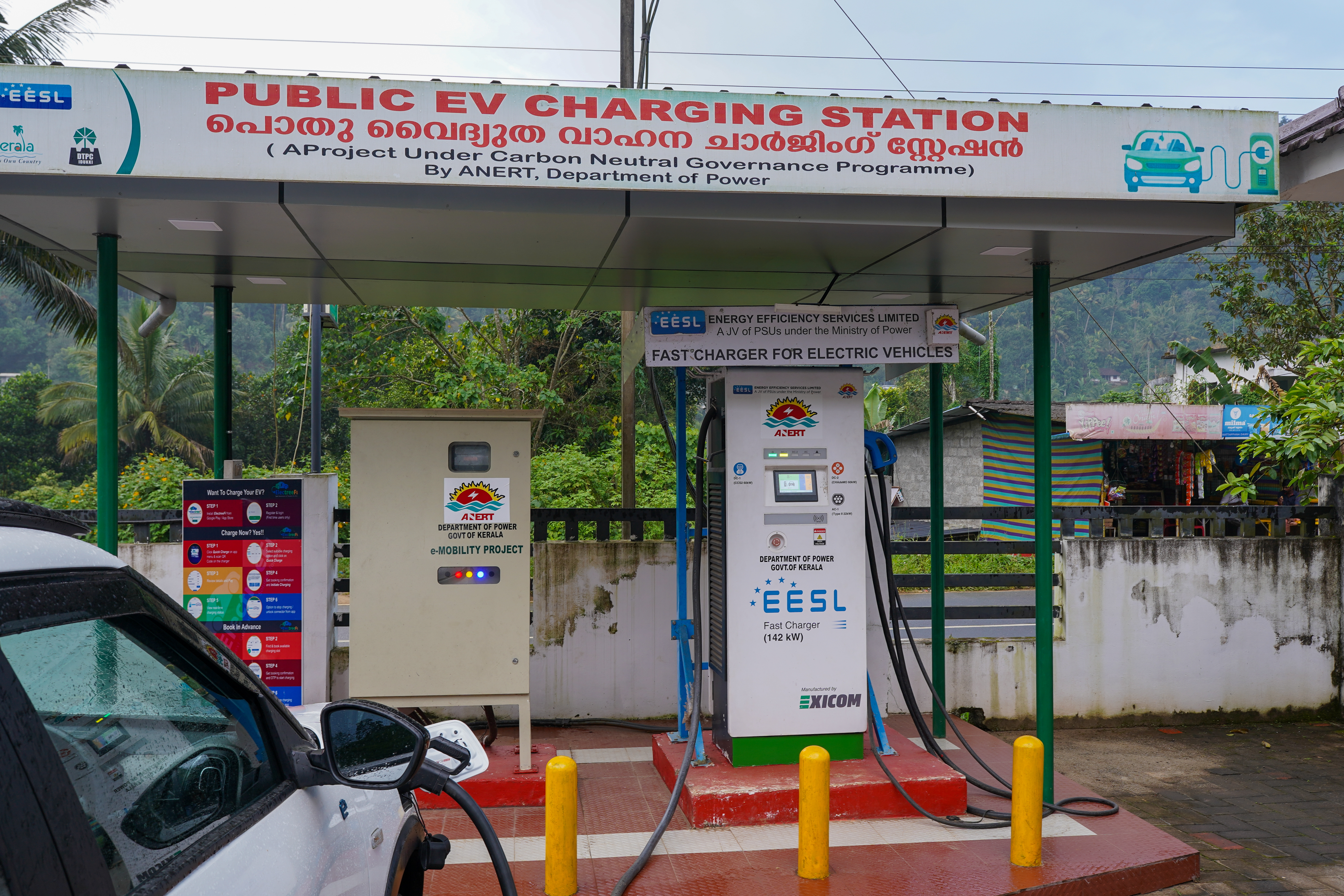
Policy Money and the Gap Between Approval and Installation
The policy framework is in place. PM E-DRIVE has been extended to March 2028 with an outlay of Rs 11,900 crore, including Rs 2,000 crore earmarked for public EV charging infrastructure. Under the earlier FAME-II scheme, 9,583 public charging stations were installed with an allocation of Rs 912.50 crore. Battery swapping or charging stations set up at any location are eligible for 80 percent support on upstream costs.
Yet the pipeline reveals a gap. As of 22 July 2026, the government had approved 6,562 public EV charging points across the country, and none had been installed. Karnataka had the largest approval at 1,571 chargers, followed by Delhi at 1,146 and Rajasthan at 805. By 28 September 2026, Rs 851 crore had been approved for the deployment of 8,147 chargers to three oil marketing companies and 10 states. Approval, in other words, is not the same as a working plug.

Reliability Is the Quiet Killer
Availability on a map is not usability on the road. Of 27,737 stations formally reported to Parliament in March 2026, only 22,753 were actively operational, an 18 percent non-functional rate. For some networks, localised downtime has run far higher. Utilisation is also poor, estimated at just 1 to 5 percent, which undermines the economics of running a charging business and slows private investment.
This is where battery swapping earns its keep, especially for two and three-wheelers. A swap takes under two minutes and sidesteps the need for expensive fast chargers in dense city centres where land is scarce. The national count already includes 1,139 swap-station chargers. Yuma Energy, backed by Magna, operates more than 2,500 charging units across 400-plus locations in 18 cities, with over 100,000 batteries deployed. Indofast Energy runs 1,900-plus swap stations across 24 cities and has partnered with GLIDA to add 100-plus more.
Home Charging Is the Missing Chapter
If 80 to 90 percent of charging happens at home, then the most valuable infrastructure investment may not be a public charger at all. It may be making residential charging visible and schedulable. Three things follow from that. Distribution companies need demand forecasting at the feeder and transformer level, not just city or state level. Housing societies and resident welfare associations need to be brought into planning early, because much of what is called public charging is really shared residential charging. And charging needs to become schedulable, so a car can shift its charging window by a couple of hours in response to a grid signal.

None of this requires waiting for a perfect five-year build-out. The tools exist: dynamic scheduling, load visibility and demand response are already running across tens of thousands of installations. What is missing is the recognition, at policy and utility level, that this is where the load lives.
The Cost of Charging, and Why It Decides Adoption
Charging economics are more lopsided than most buyers expect, and they quietly decide whether an EV makes sense. Charging at home, from a standard socket or a wall box, typically costs a fraction of what a public fast charger charges per unit of electricity. That is the single biggest reason a home charger changes the maths of EV ownership. An owner who can plug in overnight pays domestic tariff rates. An owner who depends on public fast charging pays commercial rates, often two to three times higher, and pays for the convenience with their time as well.
This is why the location of a home, and whether a housing society permits a dedicated charging point, matters more than the brand of car. It also explains why time-of-day tariffs could become a powerful tool. If utilities price off-peak electricity cheaply, millions of EV owners will happily shift their charging to late night, easing the evening peak instead of adding to it.
Who Is Building the Network
The charging business in India is no longer a single-company story. More than 200 charge point operators are active, alongside e-mobility service providers, aggregators and franchise partners. Tata Power, Statiq, ChargeZone and Reliance are among the better-known names, while oil marketing companies are entering through the PM E-DRIVE pipeline. A newer model is the franchise route, where a local investor owns a charging station the way they might own a quick-service restaurant, while the operator supplies the technology, brand and standards. That distributes the capital burden across thousands of small owners instead of one balance sheet, which matters in a country as large and varied as India.
| Charging type | Typical use | India share |
|---|---|---|
| AC charger below 30 kW | Home, workplace, two and three-wheelers | About 73 percent |
| DC fast charger | Highways, fleet hubs, cars | About 27 percent |
| Battery swapping station | Two and three-wheelers, fleets | 1,139 chargers counted |
How India Compares With the World
India's charger count looks small next to China, which has built public charging at a pace no other market has matched, and it trails the United States and Europe on fast-charging density per vehicle. But the comparison hides a difference in approach. Western markets are largely solving charging anxiety by letting a few deep-pocketed networks build at scale. India is solving it by distributing the capital, the technology and the ownership across a far wider base, because the vehicle mix here is led by two and three-wheelers, not cars. That is a genuinely different template, and it is why the two-wheeler charging and swapping story matters as much as the car one.
What Would Actually Fix It
Four things would move the needle. First, higher-power chargers on the routes people actually drive, not more low-power units that cannot serve a car on a long trip. Second, reliability standards, because an 18 percent non-functional rate destroys trust faster than a small network does. Third, interoperability, so a driver can use any network without juggling five apps, and so the data each charger generates can feed aggregate demand forecasting. Fourth, and most neglected, planning for home and residential charging at the feeder and transformer level, with housing societies brought into the conversation early.
What This Means for Buyers
If you are considering an EV in 2026, the charging decision is now more local than national. First, confirm you can charge at home or at your workplace, because that is where the vast majority of your energy will come from, and it is far cheaper than public fast charging. Second, if you plan long highway trips, check the fast-charger density on your actual route rather than the national total, because three-quarters of India's chargers cannot fill a car quickly. Third, treat public charger uptime as a real risk: an 18 percent non-functional rate means you should have a backup plan on any long drive.
The 67,657 chargers are a foundation, not a finish line. India's electric vehicle penetration has already crossed 8 percent of passenger vehicle sales and about 13 percent of overall registrations, and it is rising. The next phase is less about building more chargers than about building the right ones, in the right places, with a grid that can see and steer the load. Track how adoption and infrastructure move together on our sales dashboard, and estimate your own running costs with the EV calculator before you commit to an electric car.
(Sources: Ministry of Heavy Industries charger data, PHD Chamber of Commerce and Industry, FADA September 2026 retail data, CII estimate cited by IBEF, EVreporter and Kazam study with AEEE. Images: Wikimedia Commons, CC BY-SA 4.0 and CC BY 4.0)
::KEY_NUMBERS:: Chargers installed | 67,657 Public stations | 29,151 (Dec 2025) Target by 2030 | 1.32 million Chargers under 30 kW | about 73 percent ::TLDR:: India had 67,657 EV chargers as of August 2026, up from about 5,000 public stations in 2022 About 73 percent of chargers are rated below 30 kW, limiting long-distance use CII estimates 1.32 million charging points are needed by 2030 Studies suggest 80-90 percent of daily EV energy is drawn at home, not at public stations ::CHART:: type: bar title: Charger power mix in India (percent) labels: Below 30 kW,30 kW and above values: 73,27 source: Ministry of Heavy Industries, August 2026 ::TIMELINE:: 2022 | About 5,000 public charging stations Dec 2025 | Public stations reach 29,151 Jul 2026 | Charging points touch 52,718 Aug 2026 | Total chargers reach 67,657 ::GLOSSARY:: DC fast charger | a high-power charger that can add range quickly, unlike a slow AC unit Charge Point Operator | a company that runs charging stations PM E-DRIVE | the government's scheme for electric vehicle and charging support ::PULLQUOTE:: India counts chargers the way it once counted petrol pumps, but the electricity is flowing somewhere else entirely, and the grid is not being planned for it. ::PROS:: Six-fold growth in public stations since 2022 PM E-DRIVE extended to 2028 with Rs 11,900 crore Over 200 charge point operators now active Battery swapping growing fast for two and three-wheelers ::CONS:: 73 percent of chargers are low power About 18 percent of stations were non-functional in early 2026 Utilisation is estimated at just 1-5 percent Most approved chargers had not been installed by mid-2026 ::POLL:: What stops you buying an EV? || Charging network || Upfront price || Battery life worries || Nothing, I already own one ::SOURCES:: Ministry of Heavy Industries, PHDCCI, FADA, CII, EVreporter and KazamRelated Articles
- Best Cars Under ₹10 Lakh in India 2026 — Ranked for Safety, Mileage and Family Use
- Best Mileage Cars in India 2026 — Petrol, Diesel, CNG and Hybrid Ranked
- Level 2 ADAS Cars in India Under Rs 20 Lakh 2026 — The Complete List and What Each Costs
- Best Car Discounts This Diwali 2026 — Model-by-Model Festive Offers Compared
More on AUTOASTRA: All Articles · News · Reviews · Fuel Prices · Home