India's EV Sales Will Quadruple by FY30 — What Nomura's Forecast Means for Car and Scooter Buyers
By AUTOASTRA Editorial · 18 Oct 2026 · Electric
Nomura expects India's EV sales to more than quadruple by FY30, with electric two-wheelers leading. We break down the numbers and what they mean for buyers.
India's EV Sales Are Set to Quadruple by FY30
Global investment bank Nomura has projected that India's electric vehicle sales will more than quadruple by FY30, lifting the EV share of total automotive volumes to 12.7 per cent from under 4 per cent in FY25. The forecast, from Nomura Equity Research, is one of the more detailed roadmaps yet for how India's electric transition could unfold, and it carries a clear message for buyers: the shift is coming fastest in the smallest vehicles.


According to the report, electric two-wheelers will lead the charge, reaching over 22 per cent penetration by FY30, while electric three-wheelers are forecast to hit 78 per cent of their segment. Electric passenger cars are seen crossing 7.8 per cent. The overall automotive EV share is projected at 12.7 per cent. In other words, the electric future India is actually buying looks far more like a scooter and a rickshaw than a luxury SUV.
What the Numbers Say
| Segment | Now (FY25) | Nomura forecast (FY30) |
|---|---|---|
| Electric two-wheelers | 5.4% of sales | 22.5% of sales |
| Electric three-wheelers | 54.2% of sales | 78.0% of sales |
| Electric passenger vehicles | 2.3% of sales | 7.8% of sales |
| Overall auto EV share | 3.2% of volumes | 12.7% of volumes |
Those projections are not built on hope. Nomura points to falling lithium-iron-phosphate battery costs, localisation under the Auto PLI scheme, and the total cost of ownership advantage that electric two- and three-wheelers have already reached. For a delivery rider or a family buying a commuter scooter, an EV can now be cheaper to run than a petrol equivalent even without a direct subsidy, because the running cost per kilometre is a fraction of petrol. That parity, more than any incentive, is what makes the forecast credible: when a technology becomes cheaper to own, adoption stops depending on subsidies and starts depending on showroom availability.

The Numbers India Is Already Posting
The forecast is arriving on top of genuinely strong data. According to FADA's September 2026 retail figures, total EV retail hit an all-time monthly high of about 334,000 units, taking overall EV penetration to roughly 13 per cent. Passenger vehicle EV penetration touched a record 8.45 per cent. Electric two-wheeler registrations have been climbing sharply, with reports putting the September figure up around 89 per cent year on year, led by TVS, Bajaj, Ather and Ola.
Electric three-wheelers are already the quiet success story of India's transition, holding close to two-thirds of their market. That is a striking figure, and it explains why Nomura expects the segment to reach 78 per cent penetration by FY30. Commercial buyers, who calculate cost per kilometre for a living, have already made the switch.
The two-wheeler story is where the money is, though, because two-wheelers are the volume base of the entire Indian auto market. Nearly 1.8 million two-wheelers were retailed in September 2026 alone, according to FADA, and even a modest shift in that base moves national EV numbers more than any car launch can. This is why the electric scooter and motorcycle segment gets so much attention from manufacturers, and why almost every major brand now has an electric offering.
How Different Segments Will Get There
The forecast becomes easier to believe when you look at it segment by segment, because each has a different reason to switch. Electric three-wheelers are already winning on pure economics: a commercial operator doing 100 km a day saves so much on fuel that the higher purchase price pays back within a couple of years. That is why penetration is already above half and heading toward 78 per cent.
Electric two-wheelers are following the same curve, a few years behind. For a delivery rider or a daily commuter, the running cost advantage is decisive, and the fact that a scooter can be charged at home removes the biggest barrier. Nomura's 22.5 per cent projection for FY30 assumes this logic keeps spreading from metros into smaller towns, which is exactly what the recent sales data shows.
Electric cars are the hardest segment, because they cost more upfront, need charging infrastructure that many buyers cannot access at home, and compete against increasingly efficient petrol, hybrid and CNG options. That is why Nomura puts passenger car EV penetration at 7.8 per cent by FY30 rather than something far higher. The car market will electrify, but it will do so more slowly and more unevenly than the two- and three-wheeler markets.

Why the Charging Network Is the Swing Factor
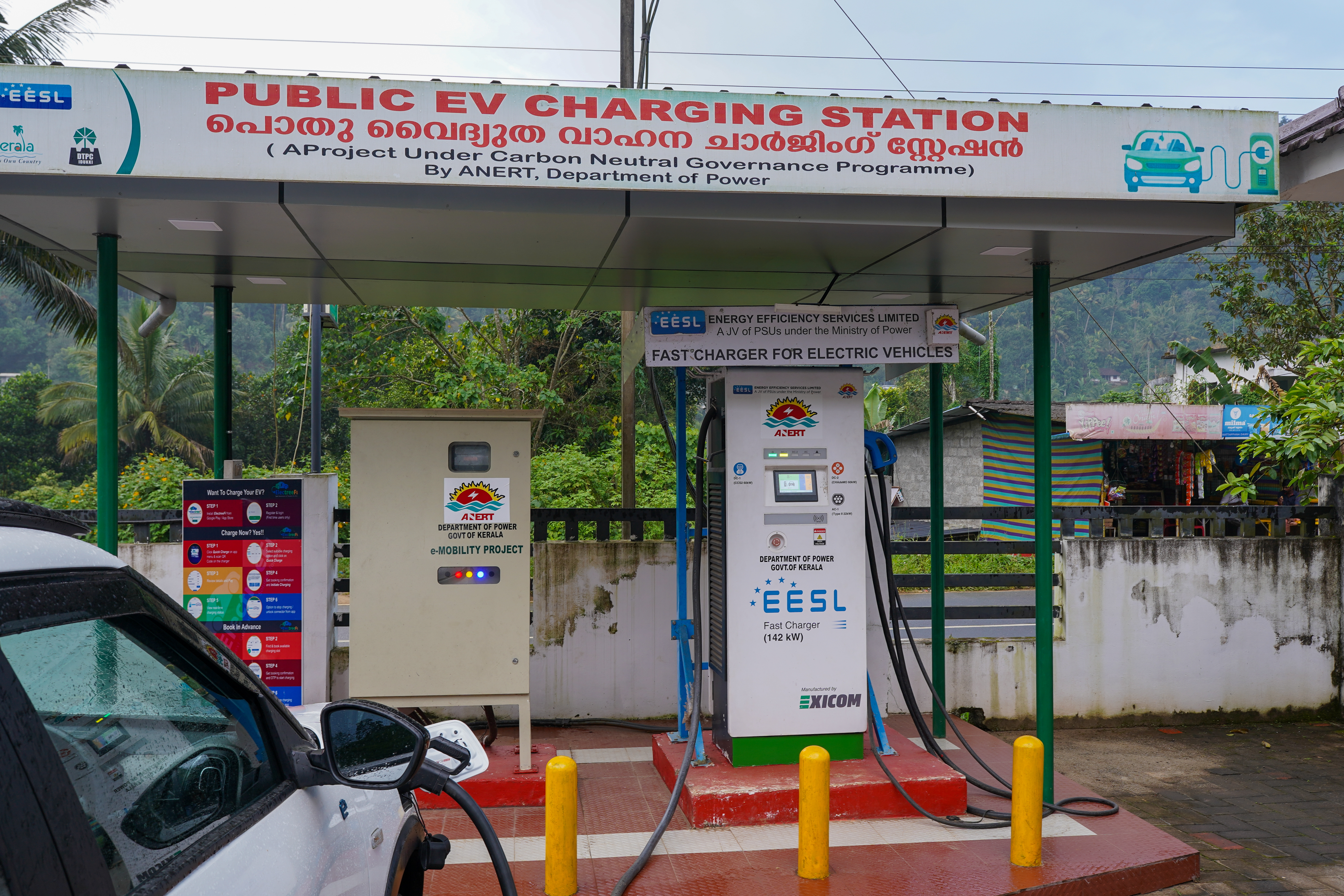
For the passenger car forecast to hold, charging has to improve. Here the picture is more mixed. Under the government's PM E-DRIVE scheme, ₹851 crore has been approved for 8,147 public EV chargers as of 28 September 2026, but installation has lagged well behind approval, and high-capacity chargers that make highway travel practical remain scarce.
Nomura's forecast assumes this gap narrows, helped by a national push to install more than 72,000 public chargers, including fast chargers along highways. If that happens, the range anxiety that currently keeps many car buyers away from EVs should ease. If it does not, the forecast for electric cars, as opposed to two- and three-wheelers, could prove optimistic.
What Could Go Wrong With the Forecast
It is worth being clear about what a forecast is. Nomura's projection is a base case, and it rests on several assumptions holding at once: battery prices keep falling, the charging network scales, policy support stays steady, and buyers keep responding to the total cost of ownership argument. If any one of those slips, the numbers move.
The most fragile assumption is charging. India has a habit of approving infrastructure faster than it builds it, and the PM E-DRIVE experience shows the gap can be wide. Battery supply is another risk: much of India's cell manufacturing is still being scaled up, and imported components and shipping constraints have already slowed EV supply, as dealers reported during the September festive build-up. There is also the question of subsidy direction, because direct purchase incentives for some EV categories have already been trimmed or closed in recent years.
None of this means the trend is wrong. It means the pace is uncertain, and buyers should treat any single forecast as a direction of travel rather than a promise. The transition is real, but it will not arrive everywhere at the same speed.
How This Forecast Compares With the Government's Own Targets
The Nomura numbers are broadly in line with the direction of official policy. The government's PM E-DRIVE scheme is designed to support roughly 72,000 public chargers and has already supported millions of EV purchases, and the Auto PLI scheme is aimed at building a domestic supply chain for advanced batteries and components. The policy architecture assumes that EVs move from a subsidised novelty to a self-sustaining market over the next few years.
Where forecasts differ is in the mix. Some analysts expect electric passenger cars to grow faster than Nomura's 7.8 per cent, helped by a wave of affordable electric SUVs. Others think the two-wheeler shift will be even quicker, because the economics are already compelling. What almost every credible forecast agrees on is the same point Nomura makes: the volume of India's EV transition will be carried by two- and three-wheelers, not by cars.
What This Means If You Are Buying Now
The practical takeaways for a buyer are three. First, if you are shopping for a scooter or a three-wheeler, the economics already favour electric in most use cases, and you should compare running costs carefully against petrol before deciding. Second, if you are shopping for a car, the decision is more nuanced: EVs make sense if you can charge at home and mostly drive in the city, but if you cannot install a charger, a strong hybrid or a CNG car may deliver a better ownership experience today.
If you want to track whether the forecast is on course, watch three indicators rather than any single headline. The first is monthly electric two-wheeler registrations, because that segment carries the volume. The second is the number of public chargers actually energised, not merely approved. The third is the price gap between an entry electric car and its petrol equivalent, because that gap, more than any policy, decides when mainstream car buyers make the switch.
Third, do not buy on the forecast alone. A projected 12.7 per cent EV share by FY30 is a decade-scale trend, not a reason to rush a purchase this month. The best approach is to match the powertrain to your actual driving pattern, your parking situation and your budget, and to treat the falling battery prices as a reason to expect better and cheaper EVs in the years ahead. You can estimate your running costs with our EV cost calculator, compare electric models on our Compare tool, and track the segment's momentum in our sales data section.
(Sources: Nomura Equity Research note, FADA September 2026 retail data, SIAM Q2 FY27 data, Ministry of Heavy Industries backgrounder, Vahan registrations. Images: Wikimedia Commons — CC BY-SA 4.0 and CC0)
::KEY_NUMBERS:: Overall EV share by FY30 | 12.7% Electric two-wheeler share by FY30 | 22.5% EV retail, September 2026 | about 3.34 lakh units Overall EV penetration now | about 13% ::TLDR:: Nomura expects India EV sales to grow more than fourfold by FY30 Electric two-wheelers are forecast to reach 22.5 per cent penetration Electric passenger cars are seen crossing 7.8 per cent by FY30 September 2026 already showed record EV retail, with two-wheelers up 89 per cent year on year ::CHART:: type: bar title: EV share of new vehicle sales now (per cent) labels: Overall EV,Passenger vehicle EV values: 13,8.45 source: FADA September 2026 ::TIMELINE:: FY25 | EVs about 3.2 per cent of India's auto volumes September 2026 | EV retail hits a record 3.34 lakh units FY30 (forecast) | overall EV share reaches 12.7 per cent March 2028 | PM E-DRIVE runs until this date ::GLOSSARY:: Penetration | the share of total sales held by a particular category, here EVs TCO | total cost of ownership, the full running cost including fuel, service and depreciation PM E-DRIVE | the government's flagship EV incentive scheme, now funded to March 2028 ::PULLQUOTE:: The electric vehicle story in India will not be written by luxury cars. It will be written by scooters and three-wheelers. ::PROS:: Electric two- and three-wheelers already near cost parity A national charging push is under way Battery prices keep falling, helped by localisation Policy certainty now runs to March 2028 ::CONS:: Charging is still thin outside big cities Battery supply and imports remain a bottleneck Electric car penetration is still under 9 per cent Price hikes risk slowing the festive momentum ::POLL:: Which EV will drive India's transition fastest? || Electric two-wheelers || Electric three-wheelers || Electric cars || Electric buses ::SOURCES:: Nomura Equity Research; FADA; SIAM; Ministry of Heavy IndustriesRelated Articles
- Best Cars Under ₹10 Lakh in India 2026 — Ranked for Safety, Mileage and Family Use
- Best Mileage Cars in India 2026 — Petrol, Diesel, CNG and Hybrid Ranked
- Level 2 ADAS Cars in India Under Rs 20 Lakh 2026 — The Complete List and What Each Costs
- Best Car Discounts This Diwali 2026 — Model-by-Model Festive Offers Compared
More on AUTOASTRA: All Articles · News · Reviews · Fuel Prices · Home