Strong Hybrid vs Petrol vs Diesel vs EV — What Each Powertrain Really Costs to Own in India (2026)
By AUTOASTRA Editorial · 11 Oct 2026 · Technology
Petrol, diesel, strong hybrid or electric? We break down the real per-kilometre running cost and ownership maths for Indian buyers in October 2026.
The Question Every Buyer Is Asking
Walk into any showroom in October 2026 and the conversation quickly turns to running cost. Petrol and diesel prices have held steady for months even as crude oil stays above 100 dollars a barrel, CNG has quietly become the cheapest fuel per kilometre, strong hybrids are claiming 27 to 29 kmpl, and electric cars promise home charging at a fraction of the cost of petrol. Each option comes with a different sticker price, a different servicing bill and a different resale story.
This guide does the arithmetic honestly. It uses today's fuel prices, real efficiency figures from manufacturers, and clearly stated assumptions for electricity, so you can plug in your own numbers and see which powertrain actually pays off for the way you drive.
What You Pay at the Pump Today
Fuel prices change daily at 6 am, but they have been remarkably stable through early October. Here is where the four mainstream fuels stood on 11 October 2026.
| Fuel | Delhi | Mumbai | Bengaluru |
|---|---|---|---|
| Petrol | Rs 102.12 per litre | Rs 111.21 per litre | Rs 111.68 per litre |
| Diesel | Rs 95.20 per litre | Rs 97.83 per litre | Rs 99.56 per litre |
| CNG | Rs 86.98 per kg | Rs 88.00 per kg | Rs 98.00 per kg |
| Electricity (home) | About Rs 8 per unit | About Rs 9 per unit | About Rs 8 per unit |

Two things stand out. First, diesel is only about Rs 7 cheaper than petrol in Delhi, so the old diesel advantage is much smaller than it used to be. Second, CNG remains the cheapest fossil fuel per unit, but its real-world cost depends on how efficiently the car uses it in kg rather than litres.
The Cost per Kilometre
The table below uses Delhi prices and manufacturer-claimed efficiency for a typical mid-size vehicle in each category. Electricity is assumed at Rs 8 per unit for home charging, which is realistic for most residential connections but varies by state and slab. These are illustrative figures, not a promise, and your own numbers will depend on traffic, load and driving style.
| Powertrain | Fuel cost | Assumed efficiency | Cost per km |
|---|---|---|---|
| Petrol | Rs 102.12 per litre | 18 kmpl | Rs 5.67 |
| Diesel | Rs 95.20 per litre | 20 kmpl | Rs 4.76 |
| CNG | Rs 86.98 per kg | 30 km per kg | Rs 2.90 |
| Strong hybrid | Rs 102.12 per litre | 28 kmpl | Rs 3.65 |
| Electric (home charge) | Rs 8 per unit | 7 km per unit | Rs 1.14 |
| Electric (public fast charge) | Rs 18 per unit | 7 km per unit | Rs 2.57 |
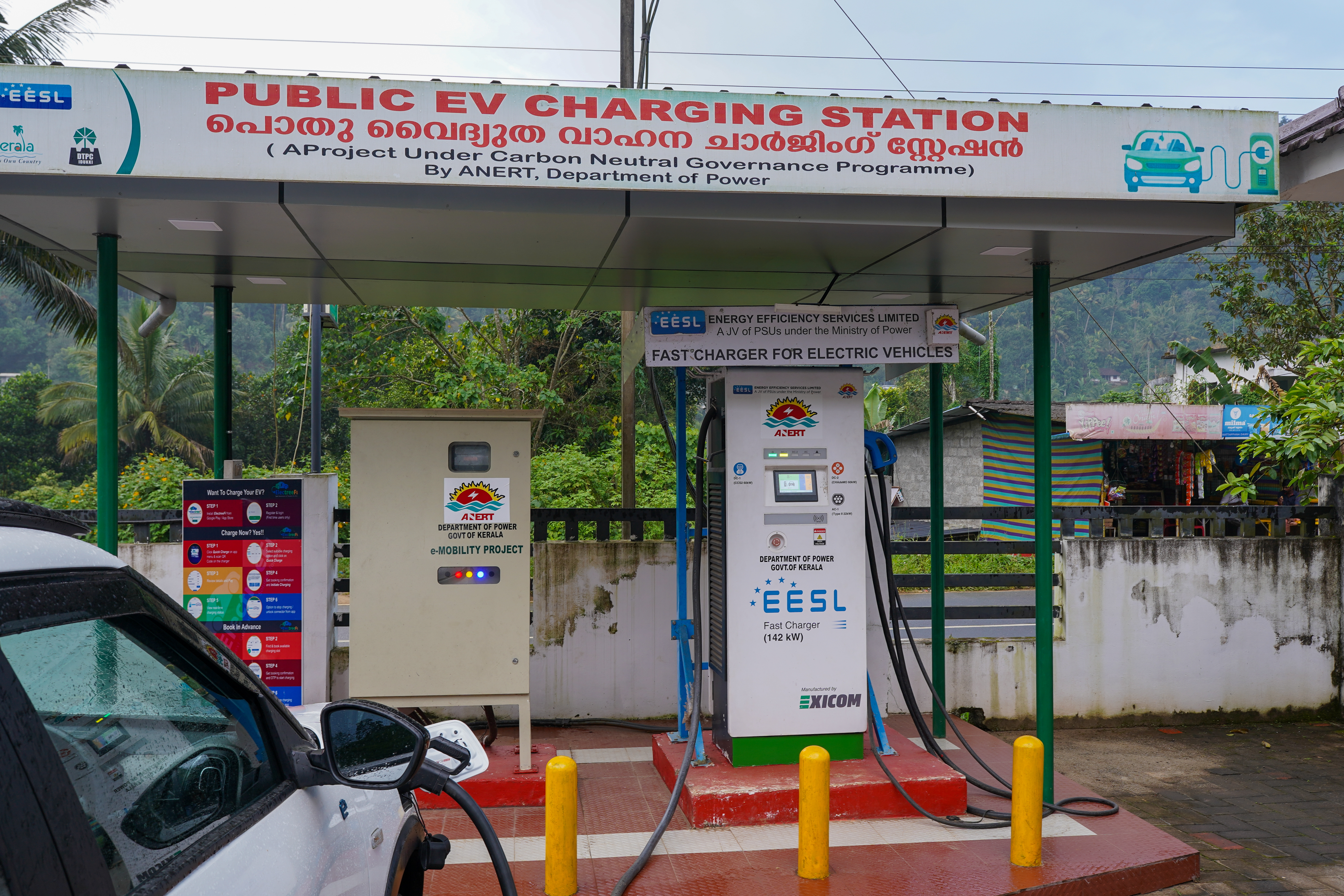
The spread is dramatic. Home-charged electric running costs roughly one-fifth of petrol per kilometre, CNG and strong hybrid sit in the middle, and petrol is the most expensive to run. But running cost is only half the story, because each powertrain also carries a different upfront price and a different servicing profile.
The Upfront Premium and How Long It Takes to Pay Off
The catch with hybrids, CNG and EVs is that you usually pay more at purchase than for an equivalent petrol car. CNG adds around Rs 1 lakh over petrol on most models, a strong hybrid can add Rs 2 lakh or more, and an electric car can carry a premium that runs into several lakh. The question is how quickly the fuel saving closes that gap.
Take a buyer who drives 15,000 km a year. Compared with petrol at Rs 5.67 per km, a strong hybrid saves about Rs 2 per km, or roughly Rs 30,000 a year, so a Rs 2 lakh premium takes close to seven years to recover through fuel alone. A CNG car, saving about Rs 2.77 per km, recovers a Rs 1 lakh premium in under three years, which is why CNG remains so popular for high-mileage city users. An EV saving about Rs 4.5 per km can recover a larger premium faster, but only if you can charge at home.
If you drive 8,000 km a year instead of 15,000, all these payback periods roughly double, and the case for paying a premium weakens sharply. Low-mileage buyers are usually better off with a plain petrol car and a lower EMI.
How to Run Your Own Numbers
The tables above use averages, but the only calculation that matters is yours. Start with your annual mileage, because it is the single biggest driver of which powertrain wins. If you drive 20,000 km a year, every extra rupee saved per kilometre compounds quickly, and a hybrid, CNG or electric car will usually pay back its premium within the loan period. If you drive 6,000 km a year, the fuel saving is too small to justify the extra sticker price, and a plain petrol car with a lower EMI is the rational choice.
Next, look at where you park. Home charging is the make-or-break factor for an electric car. If you have a dedicated parking spot and a standard 15-amp socket, the per-kilometre cost of an EV is unbeatable. If you rely on public chargers, the numbers worsen considerably, because fast-charging tariffs are roughly twice the home rate and you lose the convenience advantage. CNG has a similar gate: a nearby pump and a car with a factory-fitted kit make it a bargain, while a long detour to refuel can erase the saving.
Finally, factor in the things people forget. Insurance for EVs and hybrids can differ from petrol cars, tyres wear faster on heavier electric vehicles, and CNG cylinder certification is a recurring cost. Add these to your running-cost maths before you decide, because a difference of a rupee per kilometre can swing the answer.
Why Hybrids Are Having a Moment in 2026
Strong hybrids have moved from a niche to a serious mainstream choice in India this year, and the reason is arithmetic rather than sentiment. A strong hybrid pairs a petrol engine with electric motors and a small battery that charges itself, so it needs no plug, no lifestyle change and no new refuelling habit. It simply returns far better mileage in stop-start city traffic, which is exactly where Indian buyers spend most of their kilometres.
Renault is the latest to join the trend. Its Duster Strong Hybrid E-Tech 160, revealed on 17 October, claims an ARAI-certified 29 kmpl, the highest figure among strong-hybrid SUVs in India, from a 1.8-litre petrol engine and two electric motors producing a combined 160 PS. That follows established rivals like the Toyota Urban Cruiser Hyryder and Maruti Suzuki Grand Vitara, whose strong hybrids claim around 27 to 28 kmpl. For a buyer who does a lot of city driving but still wants a petrol engine and unlimited highway range, this is now a genuinely compelling middle path.
The catch is cost. A strong hybrid carries two power sources, so it costs more than an equivalent petrol car, and its advantage shrinks on the highway where the electric assist does less work. It rewards the urban high-mileage driver and penalises the occasional long-distance user. That is why the hybrid question, more than any other, comes down to how and where you actually drive.
Servicing, Resale and Practicality
Running cost is not just fuel. Petrol and diesel cars have the simplest, cheapest servicing and the widest repair network. Strong hybrids add a battery and electric motors but keep a conventional engine, so servicing is close to petrol and the technology is now proven in India. CNG cars need periodic kit inspection and cylinder certification, which adds a small recurring cost and can affect boot space. Electric cars have the fewest moving parts and the lowest routine servicing bill, but battery replacement outside warranty is expensive, and resale values for EVs are still less predictable than for petrol cars.
Practicality matters too. CNG and electric vehicles often lose boot space or add weight, and public charging, while growing, is still uneven outside major cities. If most of your driving is within city limits and you have a dedicated parking point, an EV is genuinely cheap to run. If you cover long highway distances regularly, a strong hybrid or a diesel remains the more flexible choice today.
What This Means for You
There is no single winner, only a best fit. If you drive a lot and mostly in the city, CNG offers the fastest payback and the lowest risk. If you want high efficiency without giving up a petrol engine or highway range, a strong hybrid is the balanced choice, and the new Renault Duster strong hybrid arriving on 17 October will give buyers another option in this space. If you can charge at home and your daily running is predictable, an electric car is the cheapest to run by a wide margin. And if your annual mileage is modest, a well-priced petrol car will usually cost you less overall than any premium powertrain.
Model your own numbers with our EV cost calculator, check today's rates on the Fuel Price tracker, and compare on-road prices on the On-Road Price calculator. For long-term figures, our Value section tracks resale and ownership trends.
(Sources: Fuel prices from livemint and Cardekho trackers dated 11 October 2026, ARAI-claimed efficiency figures from manufacturer pages and Autocar India, Renault Duster hybrid mileage confirmed by Renault India. Electricity cost is an indicative assumption, not an official tariff. Image credits: Toyota Urban Cruiser Hyryder strong hybrid photo via Wikimedia Commons, CC BY-SA 4.0; EV charging station photo via Wikimedia Commons, CC BY-SA 4.0.)
Related Articles
- Best Cars Under ₹10 Lakh in India 2026 — Ranked for Safety, Mileage and Family Use
- Best Mileage Cars in India 2026 — Petrol, Diesel, CNG and Hybrid Ranked
- Level 2 ADAS Cars in India Under Rs 20 Lakh 2026 — The Complete List and What Each Costs
- Best Car Discounts This Diwali 2026 — Model-by-Model Festive Offers Compared
More on AUTOASTRA: All Articles · News · Reviews · Fuel Prices · Home